
Many chess players focus heavily on opening preparation. They study different variations and sometimes even memorize long sequence of moves. Despite this effort, they still end up with bad positions early in the game. In this article, we will examine 7 chess opening mistakes and how to avoid them.
The problem is usually not lack of opening theory – instead, it is the result of basic opening mistakes.
The opening theory exists largely to reduce these mistakes. Strong players follow a few simple principles simple rules that help them avoid serious problems in the opening.
Players move pieces randomly , sometimes more than once. In next section, you will understand why moving same piece multiple times is bad.
Mistake 1 – Moving the Same Piece Multiple Times
Beginners often move the same piece repeatedly in the opening. This wastes valuable time, while the opponent develops new pieces. Sometimes an opponent deliberately forces a piece to move multiple times. Its purpose is to delay development and gain lead in activity.
Example 1:
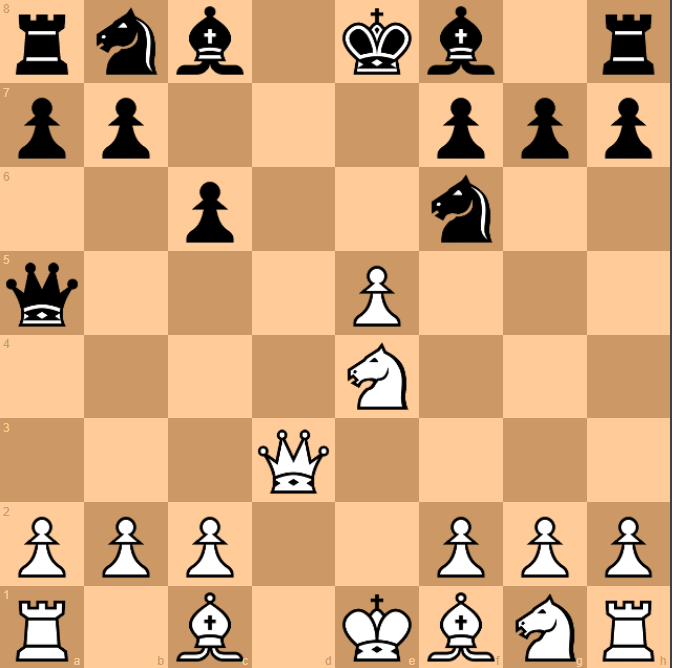
In this position, Black plays Qa5+, giving a check while also attacking e5 pawn. The knight is under threat from e5 pawn. At first, the move appear strong.
However, both sides have only a few pieces developed, and White can quickly bring more pieces into the attack.
Game Continuation:
1. Bd2 Qxe5
2. O-O-O Nxe4 (captured a poison pawn)
3. Qd8+ Kxd8
4. Bg5+ Kc7
5. Bd8#
if 4. ...Ke8 5. Rd8#
Black captured a poisoned pawn and moved the knight multiple times. White used the lead in development to launch a decisive attack. The checkmating pattern is known as Opera mate.
Note: Moving pieces multiple times is possible in some opening like Alekhine Defense, however, black cannot make mistakes because white will dominate the center and the game can be sharp.
Lesson:
Moving the same piece several times in the opening often leads to:
- loss of time
- delayed development
- vulnerability to tactical attacks
Players who fall behind in development can quickly come under dangerous pressure.
Important Note
There are exceptions. In openings such as the Alekhine Defense, Black intentionally moves the knight several times.
However, this strategy works only with accurate play. If Black makes mistakes, White can dominate the center and gain a strong attacking position.
Another problem is playing only with queen and you will understand this in next section.
Mistake 2 – Bringing the Queen Out Too Early
Many beginner chess players bring queen out too early and attack. The queen becomes the target for opponent’s minor pieces.
Two things happen when you bring your queen early in the game.
- Queen become target and sometimes you lose the queen.
- Opponent chase the queen and you lose tempo, while they develop new pieces.
Let us see an example where queen is lost due to early attack with queen in the opening phase.
Example 2:
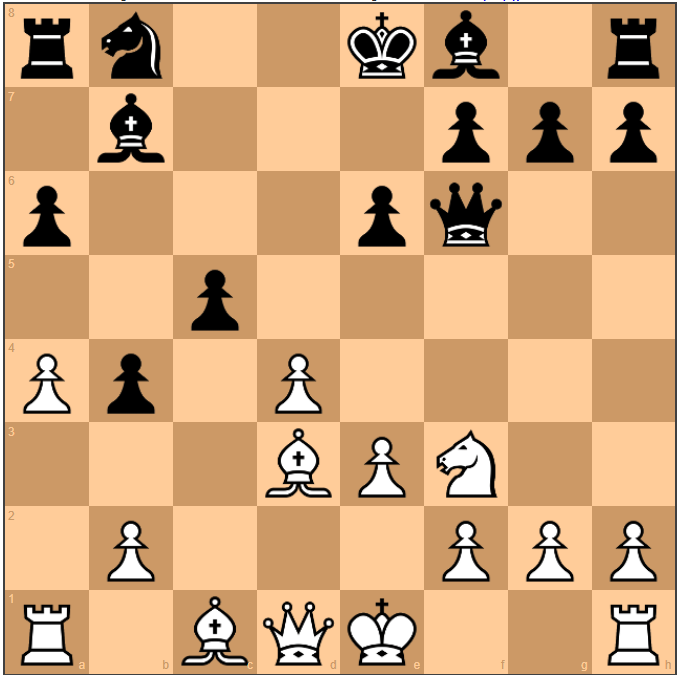
The Black player was forced to bring queen to f6 after a knight exchange. Unfortunately, Black pieces are not developed, while White is ready to trap the queen.
Game Continuation:
1. e4 cxd4
2. Bg5 Qg6
3. e5 Qh5
4. Be2 Bc5
5. Qc1 Nd7
6. Nh4 the black queen is trapped and he resigned.
Lesson:
From the above example, you can understand that one queen is trapped, due to underdeveloped pieces, black could not defend the queen. It shows the negative impact of early queen development. In the opening phase, piece development is most important, not pawn movements.
Even thought you protect your Queen, the King safety is utmost important task. If King is lost, you lost the game. Why you should not ignore King safety is explained in next section.
Mistake 3 – Ignoring King Safety
King safety is most important topic in chess. If King is checkmated, it does not matter how much material you have, or whether your pieces are developed.
Some players delay castling and as a result:
- King struck in the center.
- Open files that lead to attack on King.
- Tactical threats are possible because King is unsafe.
Example 3:
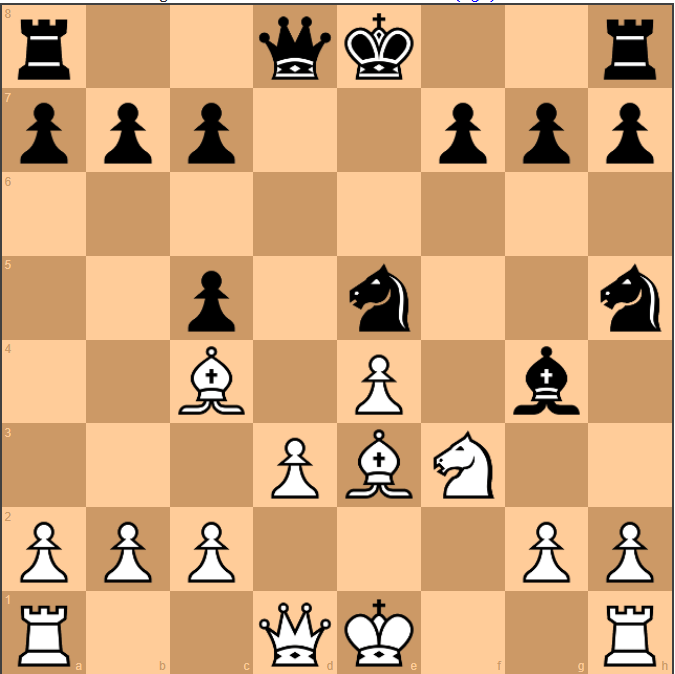
In this game, black did not castle the King yet, and started attacking. But White sacrificed his Queen to checkmate Black.
Game Continuation:
1.Nxe5 Bxd1
2.Bxf7+ Ke7
3.Bxc5+ Kf6
4.O-O+ Kxe5
5.Rf5#
Lesson:
Before starting to attack, King safety is most important. Players must castle immediately.
Important Notice
Sometimes you can avoid castling if you have the initiative. In the game above, White did not castle, but he has the initiative, a set of forcing moves that can checkmate or make his position better.
Mistake 4 – Ignoring the Center
Center squares – e4, d4, e5, and, d5 are critical squares. Players who ignore the center end up with a cramped position.
Example 4:
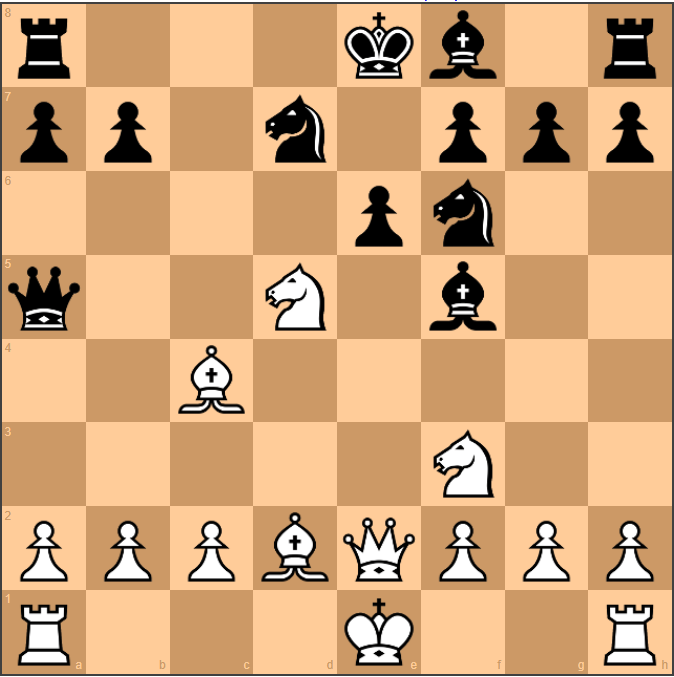
Olja Vaseva, Bulgaria, 2001
In the game above, Black is behind development, and the Queen is out. On the other hand, White is dominating the center. Its not that Black don’t contest in the center, but initiative and King safety is with White.
White can castle the King in a move, however, Black need two moves to get his King to safety.
Lesson: Don’t ignore the center. Fight for center with pieces and pawns.
Mistake 5 – Developing Pieces to Passive Squares
A true development is the one that develop pieces to active squares. If pieces are developed on square that does not do anything is as good as not developing it. Normally, pieces are developed towards center, and bishops are not restricted by own pawns. If it does, then player try to remove the pawn or pieces obstructing the bishops.
Example 5:
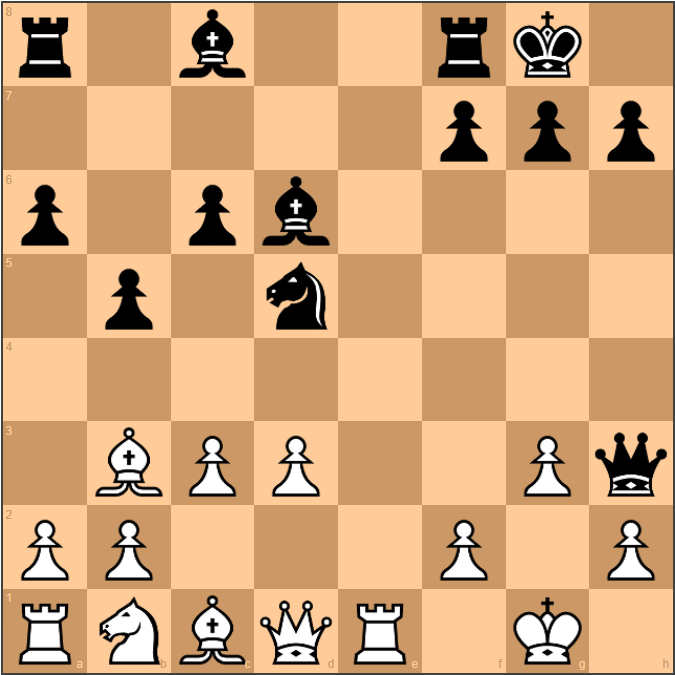
In the above position, Black is attacking continuously, and White position has become little unsafe in light squares. The two black bishops are dangerous and White’s King safety is in trouble. It is white to play after Black played Qh3.
Game Continuation:
1. Re4 Qf5
2. Nd2 Qg6
3. Re1 f5
4. Qf3 Kh8
5. Bd1 f4
6. g4
You can see that White’s King is exposed, the position is cramped. White is unable to develop pieces in proper squares. Nd2 is blocking the bishop, Qf3 is blocking d1 bishop. Black went on to win the game.
Lesson:
Always develop pieces on active squares. Development of pieces that does nothing loses the game.
Mistake 6 – Moving Too Many Pawns
Chess beginners often move too many pawns in the opening. This results in:
- Weak King positions.
- Delay piece development
- Pieces are not coordinated and support each other.
Beginner tend to move wing pawns such h3, a3, a6 or h7 a lot, fearing that opponent might pin them. Sometimes it is good in certain openings, but it waste lot of time. You could develop some other pieces instead.
Example 6:
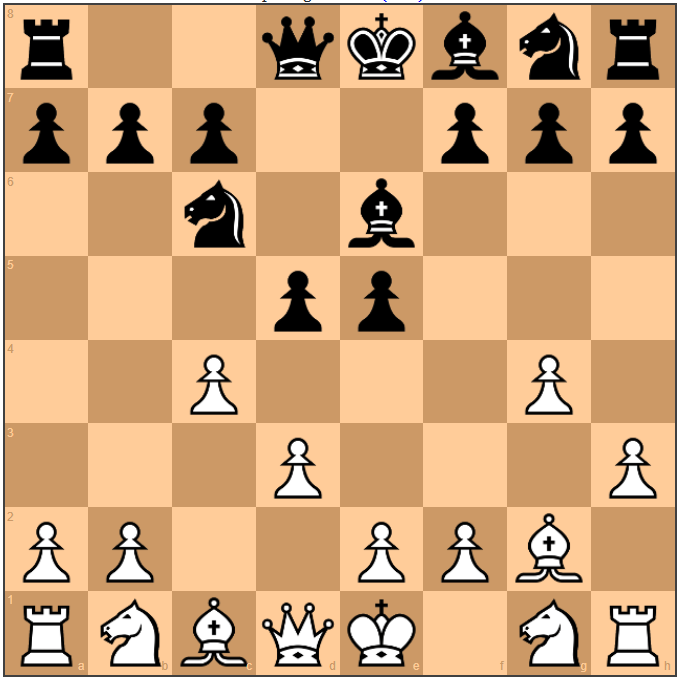
From the position, you can easily see White’s mistake. There are too many pawn move and except Bishop on g2, none of the pieces are developed. Note that the Kingside is weaken due to h3-g4 pawn moves.
Black on the other hand, developed two pieces and strong control over the center. White lost the game in few more moves.
Lesson: Don’t move too many pawns in the opening, only move pawns that free the pieces to develop.
Mistake 7 – Playing Without a Plan
Some players open the game with random moves, may be to surprise the opponent. But this is not the right way to open a chess game.
Strong players open the game with a plan.
- Develop the pieces quickly.
- Control the center.
- Castle King to safety.
- Connect the rooks.
No matter what opening strong players are playing, they try to achieve the above opening plan. If they don’t following the plan, then it is probably
- Opponent has made a mistake and strong player punish the mistake. There is clear advantage in breaking the rules of opening.
- Time advantage. If stronger players move multiple pieces than means they have attack that give them time advantage. Opponent cannot develop their pieces during attack. It is even better if we develop pieces with an attack.
Example 7:
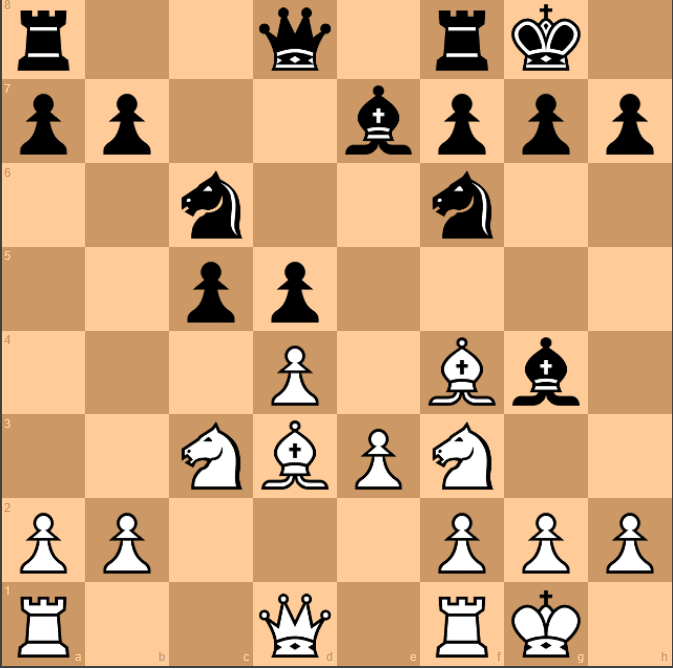
In the position above, the Black developed his Bishop on g4 pinning the White Knight on f3.
This the right way to develop with an attack, also, Black followed all the principles of opening. Due to this move, White has less control over the e5 square because the Knight cannot move. The king is castled for both players.
Lesson:
The typical opening plan of a strong player is to develop pieces, control the center, castle the King, and connect the rooks.
Conclusion
If you avoid these 7 common mistakes, it will dramatically improve your chess. Chess openings are not about memorizing move = its about understanding and following solid principles.
Pingback: How to Calculate in Chess: A Simple Thinking Process - thinkfirstchessacademy.com