
Many beginner and club players are comfortable playing the opening moves. They often know the basic principles and sometimes even memorize a few opening variations. They don’t create a plan in chess.
However, once the opening phase ends, many players start to feel lost. They may be able to calculate moves, but they struggle to understand the position.
A common question arises in their mind:
“What should I play here?”
In many positions there are too many possible moves and variations. Without a clear direction, players begin calculating random lines. This often leads to confusion, poor decisions, and eventually time trouble.
The real problem is usually not a lack of calculation. The real problem is the absence of a clear plan.
A plan in chess is simply a goal based on the features of the position.
Strong players do not calculate every move randomly. Instead, they first examine the position, identify its important elements, and then choose a plan.
In this article, we will describe a simple step-by-step method to extract a plan from a chess position.
Step 1: Identify the Pawn Structure
The pawn structure is like a map of the position. It is one of the most important features in chess because pawns usually do not move backward and they rarely change quickly. As a result, the pawn structure often determines the long-term plans in a position.
Some common pawn structures even have well-known names, such as the Carlsbad Structure and the Isolated Queen Pawn (IQP) structure.
When you examine the pawn structure, the first task is to identify weaknesses. Typical pawn weaknesses include:
- Doubled pawns
- Isolated pawns
- Backward pawns
- Weak squares
Doubled Pawns
Doubled pawns occur when two pawns of the same color are on the same file.
This structure is often considered a weakness because:
- The front pawn can become an easy target.
- The pawns cannot defend each other properly.
- They usually move slowly and restrict piece activity.
However, in some positions doubled pawns may still provide useful control of important squares.
Isolated Pawns
An isolated pawn is a pawn that has no friendly pawns on adjacent files.
This pawn can become a weakness because it cannot be defended by another pawn. Opponents often try to blockade and attack it.
However, an isolated pawn can also have advantages:
- It often provides space in the center.
- It can create active piece play.
Because of this, the isolated pawn can be both a weakness and a strength, depending on the position.
Backward Pawns
A backward pawn is a pawn that cannot advance safely because it would be captured, and it is also behind the pawns on adjacent files.
This pawn is usually considered weak because:
- It cannot move forward easily.
- It often sits on a semi-open file, making it a target for enemy pieces.
Weak Squares
Weak squares are squares that cannot be protected by a pawn.
Since pawns cannot defend these squares, they often become excellent outposts for the opponent’s pieces. A knight placed on a weak square can become very powerful.
Strong players often try to occupy these squares to gain space and control inside the opponent’s position.
Positive Features in Pawn Structures
Pawn structures also contain positive features, not just weaknesses.
One important example is a pawn majority. If a player has more pawns on one side of the board (kingside or queenside), this can often be used to create a passed pawn in the endgame.
A passed pawn is extremely powerful because it can advance toward promotion and eventually become a queen or another valuable piece.
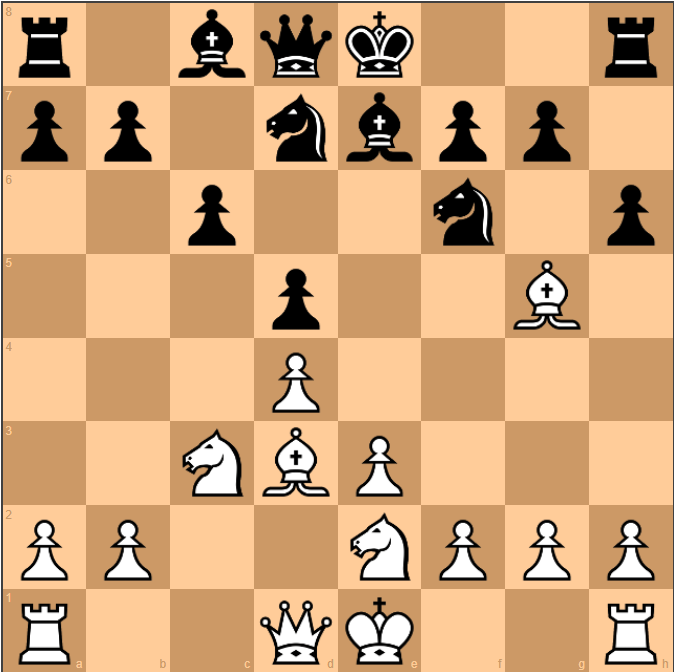
Lesson
The pawn structure often suggests the long-term plan in a position. They are a map to create a plan in chess.
By identifying pawn weaknesses, strong squares, and pawn majorities, you can understand where to attack, where to defend, and which pieces to improve.
In many positions, the correct plan becomes clear once the pawn structure is properly understood.
Step 2: Identify Weak Squares
A weak square is a square that cannot be protected with a pawn. There are three cases of weak pawns.
- Squares that are weak because no enemy pawn is guarding it.
- Square that are guarded by pieces only. If you have enough support then one can occupy the square.
- Square that are weak and also, guarded by our support pawn. These are called the outposts.
What can we do with weak squares to create a plan in chess?
One of the main goals of chess is to increase the activity of pieces. Weak squares are excellent locations for pieces.
Each side in chess advance their pieces safely and find tactical ideas that can exploit opponent position. A minor pieces such as Knight or a Bishop can occupy the weak squares.
The best position to occupy is an outpost. In an outpost, enemy pieces cannot remove our pieces easily. If opponent captures the pieces we can provide enough support to replace that piece.
For example, outpost on d5 or e5 is the best. The range and influence of knight or bishop increases in the center significantly.
Example 2:
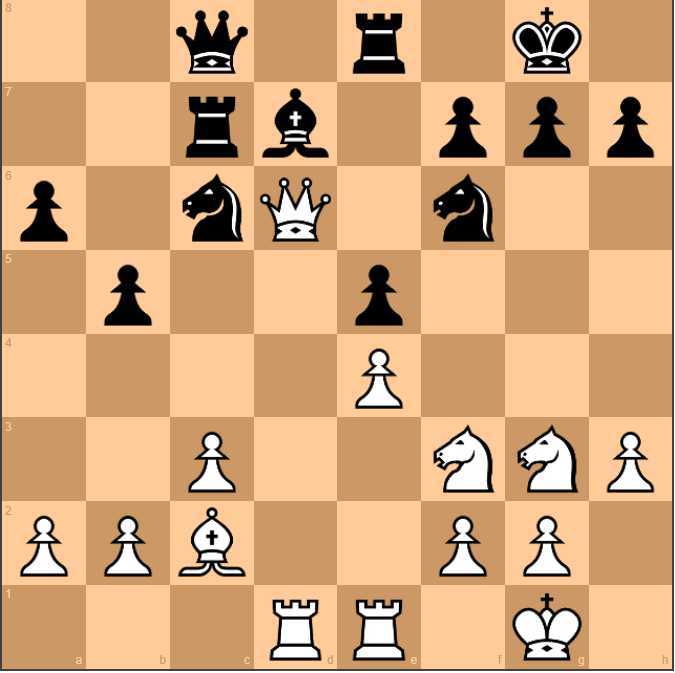
The position is from game between Bobby Fischer and Charles Sharp, Fischer dominated the entire game with the Queen on weak squares on c5 and d6 throughout the game and won eventually.
Lesson:
Weak squares are important targets in a chess position. By identifying weak squares and placing pieces on them, players can improve their piece activity and gain a long-term positional advantage.
Step 3: Improve Your Worst Piece
Club player do a common mistake of moving pieces randomly. Some pieces does nothing at the same time. If the position has no tactical play, then you must improve your worst pieces.
If the development is over, then players must
- Activate a bad bishop
- Bring a knight to central square or outpost.
- Put rook into open file or a semi-open file.
These are small improvement and they improve the chess position.
Example 3:
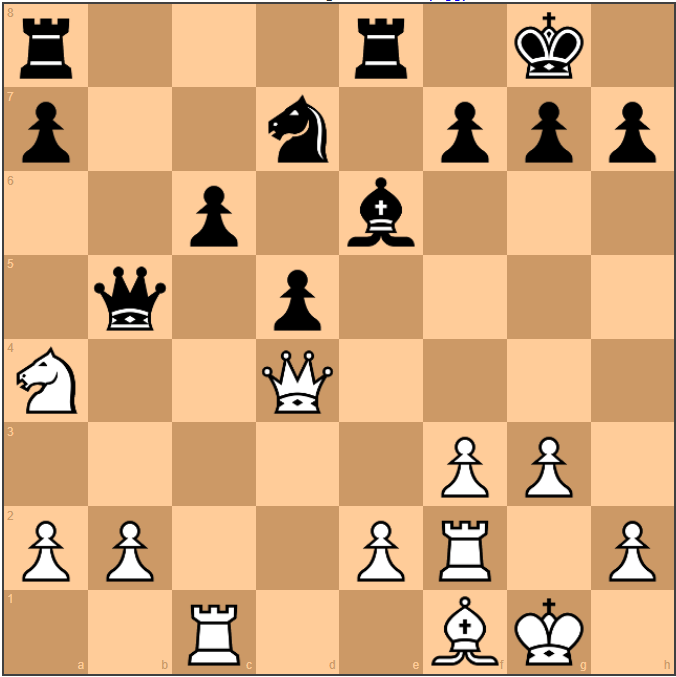
In the position from game between, Rubinstein and Salwe, there is no tactics, nothing to play for White, the Bishop on g2 is doing nothing. White already moved rook on f2 and moved Bf1, in the next move , White plays e3 and threatens the Black Queen.
This is how we must improve the worst pieces and bring it into the game.
Lesson:
Improving your worst piece always improve your position.
Step 4: Choose the Side of the Board to Play on
Most plans focus on one area of the board, sometimes two. It depends whether the game is dynamic or slow positional game.
The type of center also decides which side of the board you must play.
Open Center
If the center is open, then the player attack the center, or opposite side of the castled King.
Closed Center
If the center is closed, then each player tries to attack on wing – either Kingside or Queenside. This type of game is slow and positional.
If the players, castled , then the game is decided by a pawn race, whoever expose the opponent King first is likely to win.
Example 4:
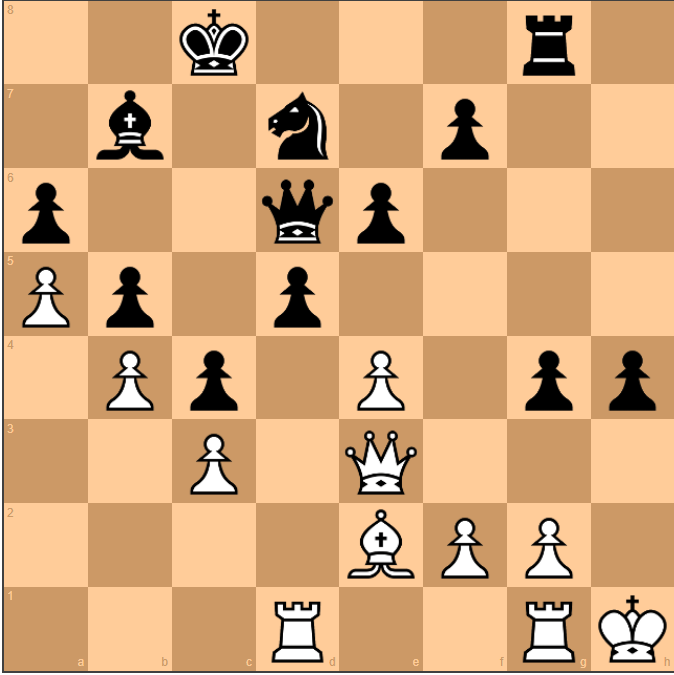
In the above game, Black castled opposite direction, and attack the White Kingside. Black won the pawn race and eventually exposed White King. Black won the game.
Lesson:
The best side to play is:
- Side opposite to your castled King.
- Where you have pawn majority
- The direction your pawn chain is pointing to.
- Where most of your pieces located.
Step 5 – Create a Plan in Chess Using Candidate Moves
Once you have identified pawn structure, weak squares, and a plan to play on queenside, center or, kingside, the next step is to convert the plan into candidate moves.
A plan is only useful if it can be turned into actual moves on the board.
Example 5:
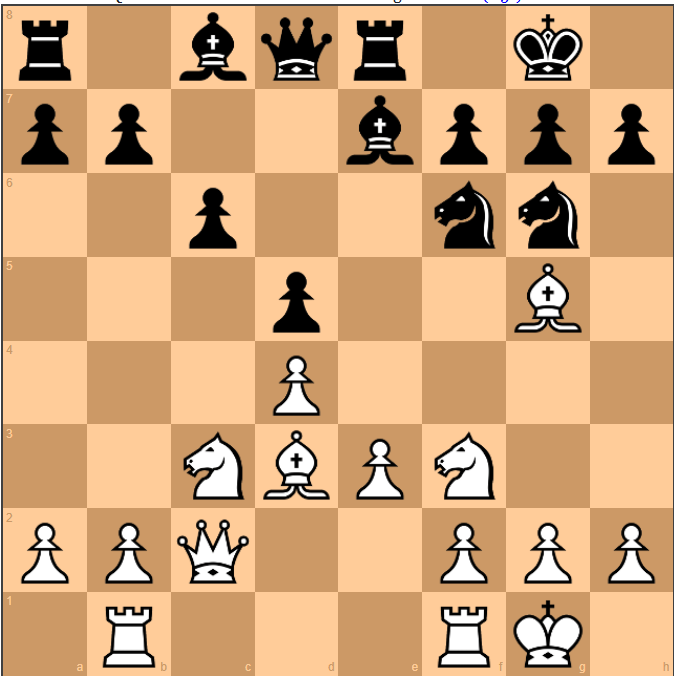
In the position from game between Vasily Smyslov and Paul Keres, the white identifies the structure as Carlsbad pawn structure, the weak pawn in the structure is c6. The plan is to attack the c6 and b7. This kind of attack is called Minority Attack.
To continue this attack, White plays Rc1 and b2-b4, the Queen on c2 to joins later.
Game Continuation:
1. Rc1 Ng6
2. b4 Bd6
3. b5 Bd7
4. bxc6 Bxc6
5.Qb3
The last move Qb3 is directs the attack to b7 pawn, which has become weak. All moves are contributing to same strategic goal.
Why Candidate moves are important?
Many club player make mistake of calculating random moves. However, strong players choose their plan, and then they choose only the moves (Candidates) that support that plan.
This saves time, and confusion.
Instead of 10 random moves, and seeking material, you only need 2-3 candidate and calculate them.
Lesson:
Good thinking process in chess follow the order gicen below.
- Understand the position
- Choose a plan
- Generate 2-3 candidates
- Calculate and play the best candidate move.
The Planning Checklist
Before a move, you must ask following questions to create a plan and candidate moves.
- What is the pawn structure?
- What are the weak squares or pawns?
- What is my worst piece?
- Which side should I play on ?
- What are my candidates ?
Note that just because we are evaluating the position, and creating a plan does not mean to ignore basic tactical scan. Evey move you must do a CCT (Check, Capture, and Threat) scan. Also, potential pawn breaks.
Summary
Creating a plan in chess is not a mysterious thing. It comes from understanding the position. If you following the simple process of evaluating the position, choosing a plan, and candidate moves, you will play more purposeful chess.
Pingback: 5 Essential Checkmate Patterns in Chess